Dubai to Salalah by Car: Route, Distance, Border Requirements & Road Trip Guide
Driving from Dubai to Salalah by car is one of the great road trips of the Arabian Peninsula — and one of the longest. It is roughly 1,220 to 1,300 kilometres each way, crossing an international border and running the length of Oman’s interior before the road climbs into the Dhofar mountains. It is entirely doable in a normal saloon car on paved highway. It is not a casual day out.
This guide covers the route stage by stage, what you need at the border, whether your insurance and your car are actually allowed into Oman, realistic timings, fuel planning, and what changes during Khareef. If you are still choosing your dates, read the best time to visit Salalah first — the season changes this drive more than any other factor.
Before you read on: border procedures, visa eligibility, fees, opening hours and insurance rules change, and they differ by nationality, residency status and visa category. Everything here is a planning framework. Verify the specifics with the Royal Oman Police eVisa portal and your own insurer before you leave.
Can You Drive from Dubai to Salalah?
Yes. There is a continuous paved route from Dubai to Salalah, and thousands of UAE residents make the trip every Khareef season. But it is a long cross-border journey of approximately 1,220–1,300 kilometres, and the honest framing is this: it is a serious drive that rewards preparation and punishes improvisation.
Three things have to be true before you set off. You need to be eligible to enter Oman and to hold whatever visa applies to you. Your vehicle needs to be permitted to cross — which is not automatic if it is financed, borrowed or rented. And your insurance needs to actually cover Oman. Any one of those missing at the border ends the trip there.
Dubai to Salalah Distance and Driving Time
All figures below are approximate and vary with your starting point in Dubai, the border you use, traffic, roadworks and how much time the crossing takes on the day.
| Approximate distance | 1,220–1,300 km one way |
|---|---|
| Driving-only time | Approximately 12.5–14 hours |
| Realistic total journey | Approximately 14–16 hours including border, fuel, food and rest |
| Recommended days | Two days for most travellers |
| General route | Dubai → Al Ain → Mezyad/Hafeet border area → Ibri/Nizwa or Adam → Haima → Thumrait → Salalah |
| 4WD required? | No, not for the main paved journey |
Border processing is the single most variable element. It can be quick midweek and considerably slower on weekends, public holidays and at the peak of Khareef travel, when a large number of UAE and GCC vehicles are heading the same way. Build slack into the plan rather than assuming a best case.
Best Route from Dubai to Salalah
The inland route is the one to take: Dubai → Al Ain → the Mezyad/Hafeet border area → Ibri/Nizwa or Adam → Haima → Thumrait → Salalah. Navigation apps may propose variations depending on your exact starting point in Dubai, live traffic, roadworks and border access, so treat the stages below as the shape of the journey rather than a turn-by-turn script.
The long-distance middle section follows Oman’s inland north–south highway linking the Nizwa/Adam area with Haima, Thumrait and Salalah. Route numbering and junction layouts change over time — follow current road signs and live navigation over anything written in a guide, including this one.
Stage 1 — Dubai to Al Ain and the Oman Border
Fast, familiar dual carriageway with plenty of services. This is the easy part and the part where people lose time, because it is tempting to leave late. Fill the tank on the UAE side before the border: fuel is generally cheaper in Oman, but you do not want to arrive at the crossing low and then queue. Eat something properly here too — the food options thin out considerably later.
Stage 2 — Border to the Nizwa or Adam Area
Once through, the road runs down through the Ibri and Nizwa region. Good paved highway, mountains on the horizon, and the last stretch of the journey where towns, fuel and restaurants appear at comfortable intervals. Nizwa is a genuine town with hotels, a famous fort and a souq; Adam is smaller and sits closer to the point where the road commits to the desert. This is where most people should be thinking about stopping for the night.
Stage 3 — Adam to Haima
The character of the drive changes completely. Long, straight, flat desert highway with very little to look at and long gaps between services. It is well surfaced and generally quiet, which is exactly what makes it dangerous: this is where fatigue and highway hypnosis set in. Refuel at Adam before starting this section, regardless of what the gauge says, and plan a proper stop rather than pushing through.
Stage 4 — Haima to Thumrait
More of the same, and the emptiest part of the whole route. Haima is a service town rather than a destination — fuel, food, basic facilities — and it exists largely because of this road. Top up here. Mobile coverage can be patchy across this stretch, so have offline maps downloaded before you need them, and expect long-haul trucks that take a while to overtake safely.
Stage 5 — Thumrait to Salalah
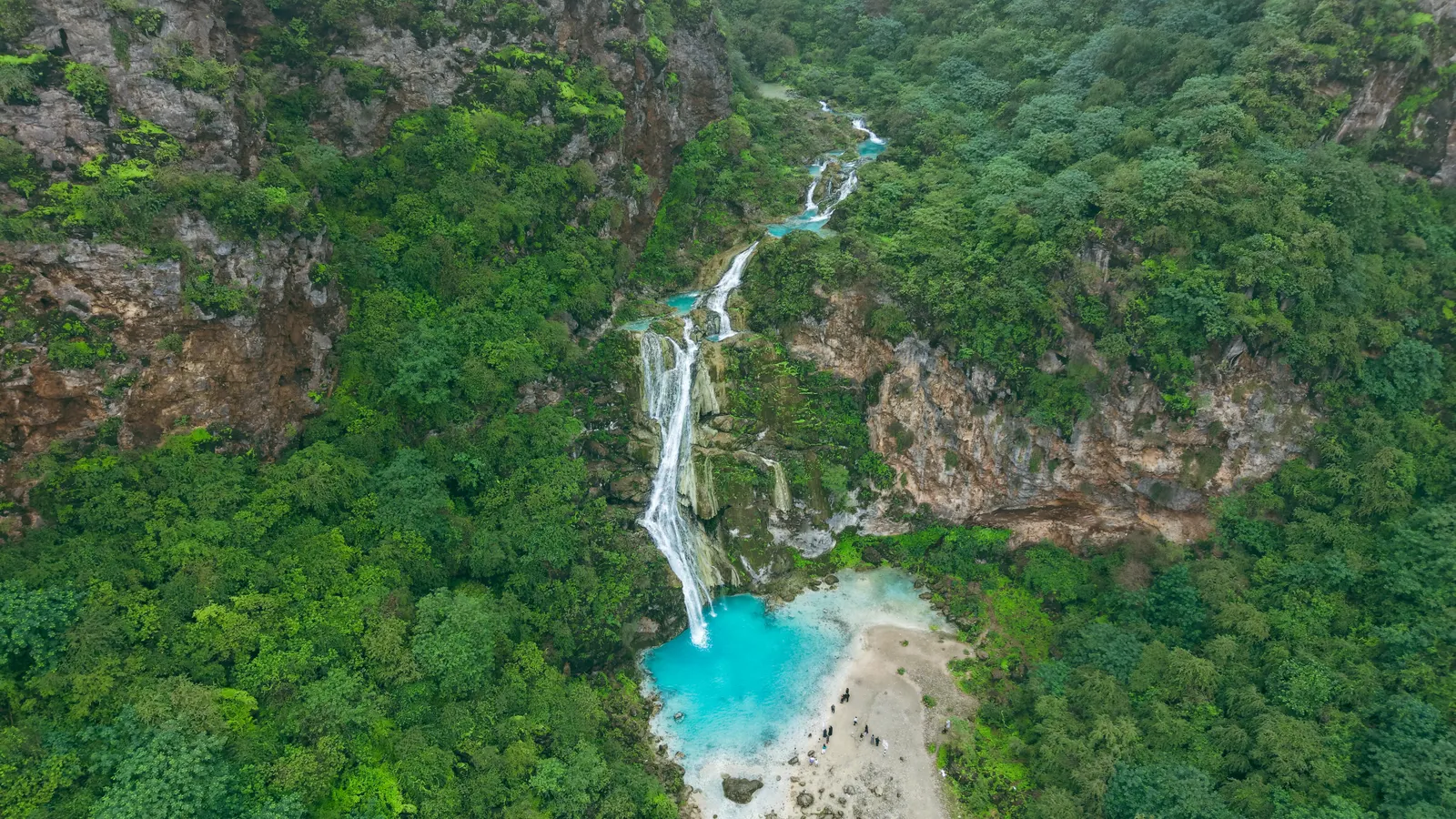
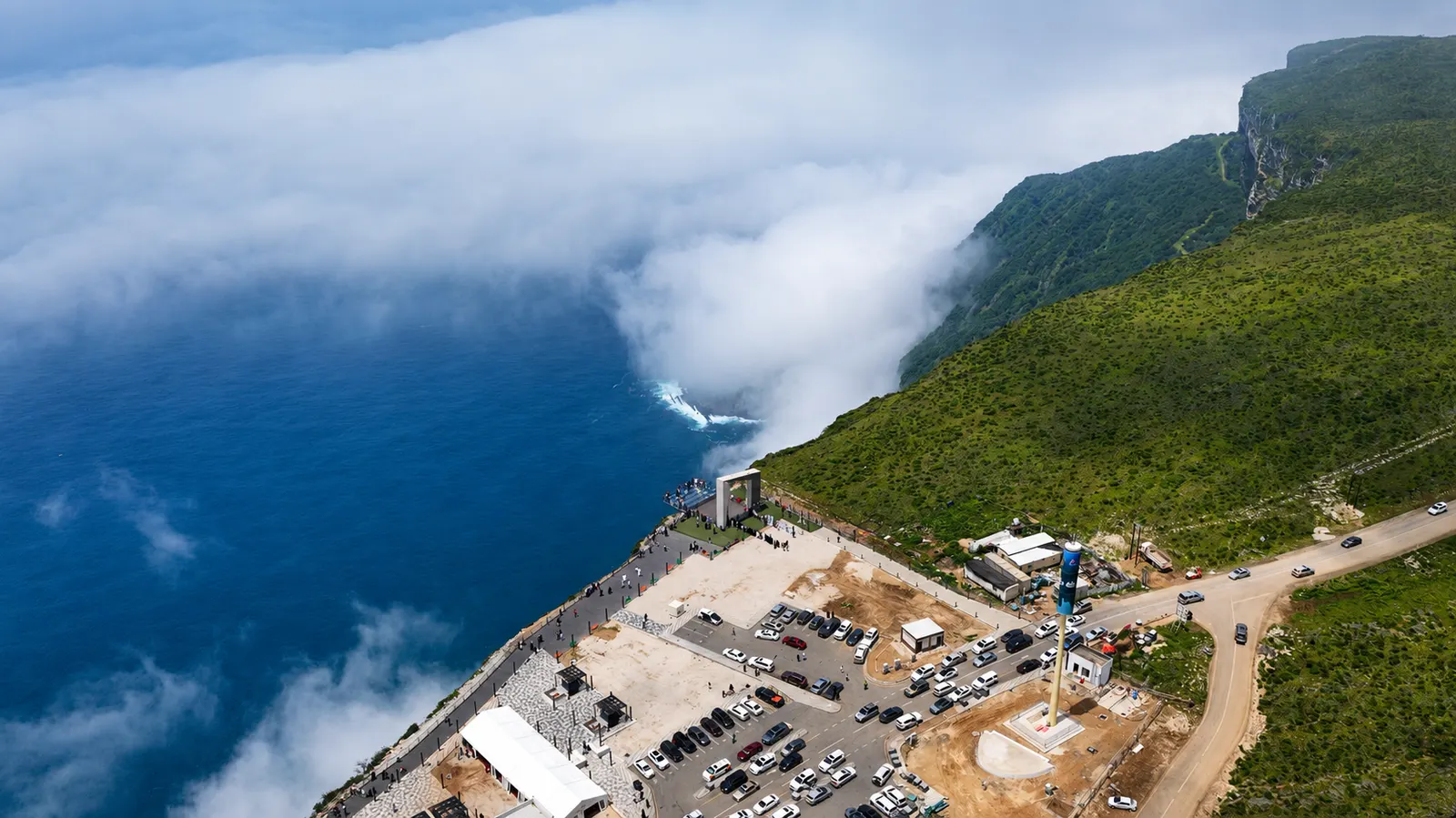
The final and most interesting hour or so. The desert plateau ends and the road descends through the Dhofar escarpment towards the coastal plain. Outside Khareef this is a scenic run with long views. During Khareef it is where the weather arrives: cloud, drizzle and fog can appear over the pass with very little warning, and visibility can drop sharply. Slow down, use low beams rather than high, and do not let the fact that you are nearly there push you into driving faster than conditions allow.
Which UAE–Oman Border Should You Use?
For this inland route, the crossing south of Al Ain — commonly referred to as Mezyad on the UAE side and Hafeet on the Oman side — is the usual choice, because it feeds directly onto the road towards Ibri and Nizwa.
Naming is a genuine source of confusion, and worth understanding before you rely on a map pin. The Al Ain area has more than one crossing: Hili and Khatm Al Shiklah are separate posts serving Al Buraimi and other traffic, and they are not interchangeable with Mezyad/Hafeet. Different map services label the same crossing differently, and some crossings are restricted by nationality, residency status or vehicle type. If your navigation app and the road signs disagree, follow the signs and official guidance.
Before travelling, confirm for your own situation:
- Whether that crossing is open to your nationality and visa category
- Current opening hours, including any change during holidays
- Whether your vehicle type and ownership status are eligible
- Any temporary restrictions or closures
- What the crossing is actually called on current signage
Do not assume a visa on arrival. Eligibility depends on your passport, your UAE residency status, your profession in some cases, your visa category and current Oman immigration rules. The Royal Oman Police direct road travellers who require a tourist visa to apply through the official Oman eVisa portal — check your own eligibility there well before departure, not at the barrier.
Documents Required to Drive from Dubai to Salalah
- Passport with sufficient remaining validity
- Valid UAE residence documentation and Emirates ID, where applicable
- Oman visa, or confirmed evidence of your visa eligibility
- Valid UAE driving licence
- Vehicle registration card (mulkiya)
- Vehicle insurance that is valid in Oman, with proof
- Travel insurance
- Hotel reservation details
- Emergency contact details
- Photocopies or secure digital copies of everything above
If you own the car
Carry the original registration card, or the digital version if that is accepted. Confirm with your insurer that the policy extends to Oman and carry the evidence — a verbal assurance on the phone is not proof at a border.
If the car is financed
Check whether your bank or finance company requires a no-objection certificate before the vehicle leaves the country, and obtain it in advance if so. Do not assume a financed car can cross automatically; the registered interest in the vehicle is not yours alone.
If the car is borrowed
Carry a signed no-objection letter from the registered owner authorising you to take the vehicle out of the UAE, along with copies of the owner’s identification and the vehicle documents. Confirm the current requirements before you travel, as the accepted format can change.
If the car is rented
Get written permission from the rental company, confirm that cross-border travel into Oman is allowed under your agreement, and confirm that Oman insurance is included or arranged. Never attempt the crossing without the rental company’s authorisation — at best you are turned back, at worst you are uninsured in another country.
In every case, requirements change and border officers have final authority. Carrying one more document than you think you need costs nothing.
Oman Car Insurance
This is the detail that catches people out most often. A standard UAE motor policy does not automatically cover Oman.
- Ask your insurer directly whether your policy extends to Oman, and get it in writing.
- The cross-border document is commonly called the Orange Card — formally the Unified Arab Motor Insurance Card — or an Oman extension.
- Some UAE policies extend own-damage cover into Oman but not third-party liability, which is the part the Orange Card is designed to provide. Confirm exactly which cover you have.
- If your policy does not cover Oman, temporary cover can sometimes be arranged near the border, but availability, terms and price vary and cannot be relied on.
- Arrange this in advance. Leaving it to the border queue is how a trip gets delayed or abandoned.
Estimated Dubai to Salalah Road-Trip Cost
There is no honest single figure for this trip. Fuel consumption, vehicle type, visa category, hotel choice and insurance all vary too much. Plan against the categories instead:
| Cost item | What to check before you go |
|---|---|
| Fuel | Current pump prices in the UAE and Oman; your car’s real consumption; both directions plus local driving |
| UAE exit / border-related fees | Current amounts, which change — confirm at the time of travel |
| Oman visa | Your eligibility and the current fee for your category via the official portal |
| Oman vehicle insurance | Orange Card or Oman extension; duration needed; whether it is included in your policy |
| Meals and drinks | Two travel days each way, plus limited choice on remote stretches |
| Overnight hotel | One night each way if splitting the drive; book early during Khareef |
| Emergency allowance | Tyre, breakdown, unplanned extra night, medical |
How to estimate your fuel
Work it out from your own car rather than someone else’s figure:
Litres needed = total kilometres ÷ your car’s average km per litre
Fuel cost = litres needed × current average fuel price
Example only: for a 1,250 km one-way journey in a vehicle averaging 10 km per litre, 1,250 ÷ 10 = approximately 125 litres one way. That excludes the return journey and all local driving around Salalah and Dhofar, which adds up quickly once you start covering the coast and the mountains. Apply the current pump price at the time you travel rather than any figure quoted in an article.
Best Fuel and Rest Strategy
- Start with a full tank and refuel before each long remote section, not during it.
- Never let it run down to the warning light out here — the next station may be a long way further than you think.
- Carry plenty of drinking water for everyone in the car.
- Stop roughly every two hours, get out, and move around properly.
- Use established service stations rather than gambling on something smaller.
- Download offline maps before you lose signal.
- Carry a charging cable and a charged power bank.
- Share your route and expected arrival with someone who is not in the car.
- If you are tired, stop. Fatigue is the real hazard on this route, not the road surface.
- Avoid unnecessary night driving, particularly on the desert sections where animals are hard to see.
Do not carry loose fuel containers inside a passenger vehicle. Plan your refuelling properly instead.
Is the Dubai to Salalah Drive Safe?
Broadly yes — the route is paved highway for its entire length, and the road itself is in good condition. The risks are about duration, monotony and remoteness rather than difficulty.
- Driver fatigue — the single biggest danger on this drive.
- Concentration loss on long straight roads, which is exactly where reaction times matter.
- Camels and other animals on and beside the carriageway, especially at dawn, dusk and after dark.
- Heavy vehicles that take time and space to overtake safely.
- Sand and dust reducing visibility on exposed sections.
- Sudden fog near Salalah during Khareef, which can close in within a minute on the escarpment.
- Wet, slippery mountain roads in the Dhofar hills during the season.
- Roadworks and diversions, which appear without much warning.
- Patchy mobile coverage across the middle of the route.
Follow posted speed limits and current local traffic law. Oman enforces speed limits, and no arrival time is worth a fine or a crash — if you are running late, stop for the night rather than trying to make it up on the road.
Driving to Salalah During Khareef
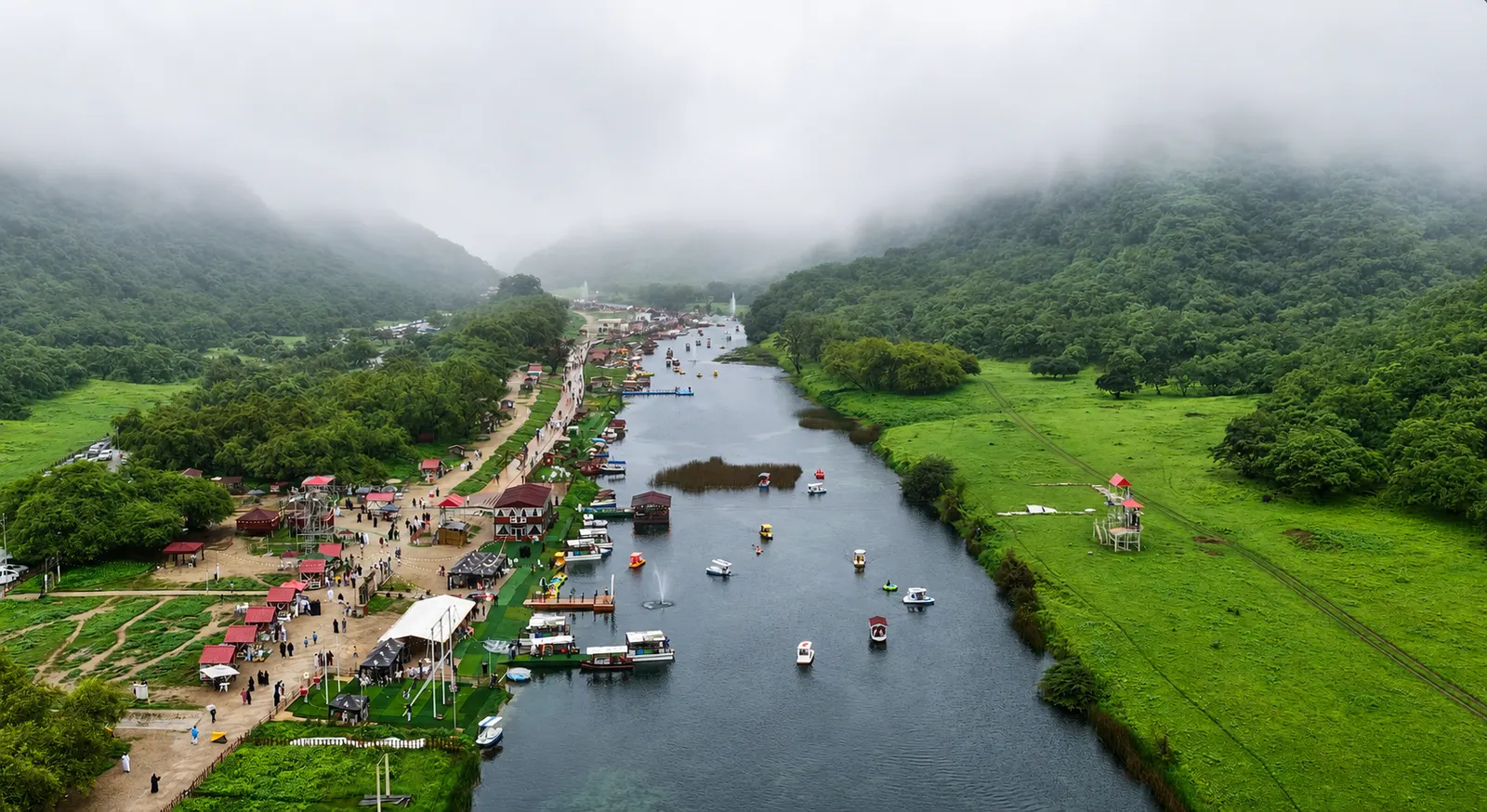
Khareef generally runs from mid-June to September — official Oman tourism information describes the season in Dhofar as June to September, with mist and light showers across the plains and mountains. July and August are the popular months for the green landscape. It is also when this drive is busiest and most weather-affected.
- Traffic increases significantly at peak times, including at the border.
- The mountain roads near Salalah become foggy and wet, and visibility can change within minutes.
- Seasonal water can affect low-lying areas and wadi crossings.
- Never drive into flowing or flooded water, however shallow it looks.
- Waterfall flow and greenery are never guaranteed — they depend on the rain that year.
- Book hotels and rental vehicles early; both get tight in peak season.
Do You Need a 4WD?
No — not for the drive from Dubai to Salalah, and not for most of the city and coastal attractions once you arrive. The whole main route is paved, and a normal saloon handles it comfortably.
A 4WD becomes necessary, or strongly advisable, for:
- Remote beaches reached by rough tracks
- Desert tracks and soft sand
- Rub Al Khali excursions
- Rough or unsurfaced mountain roads
- Anywhere current conditions have made the surface unsuitable for a normal car
Do not attempt off-road routes without the right vehicle, genuine experience and recovery equipment — and preferably a second vehicle or a local guide.
Preparing Your Car Before the Journey
- Tyre pressure and tyre condition, including tread and sidewalls
- Spare tyre — inflated and actually present
- Jack and wheel tools
- Engine oil and coolant levels
- Brakes
- Battery condition
- All lights, including indicators and brake lights
- Windscreen wipers and washer fluid — these matter in Khareef
- Air-conditioning
- Roadside-assistance cover that is valid in Oman
- Emergency triangle and first-aid kit
- Phone charger, power bank, offline maps
- Drinking water and basic snacks
If the car is older or high-mileage, book a professional inspection before you go. A fault that is a minor annoyance in Dubai is a serious problem 300 kilometres from the nearest workshop.
Dubai to Salalah with Children or a Baby
It is very doable, and families make this trip every season — but it is the clearest case for splitting the journey over two days.
- Divide the drive across two days; a 14–16 hour push with young children is a bad idea.
- Use an age-appropriate, correctly fitted child seat for the entire journey.
- Schedule frequent breaks and accept that they will make the trip longer.
- Carry food, milk, water and any regular medicines — do not count on finding them en route.
- Plan around changing facilities, which are limited on the remote stretches.
- Sun protection and window shades for the long exposed sections.
- Extra clothing: it is genuinely cooler and damper in the Dhofar mountains than in Dubai.
- Watch for dehydration, which creeps up on a long air-conditioned drive.
- Never leave children in a parked car, even briefly.
- Book accommodation in advance rather than hoping to find something late.
This is general travel advice, not medical advice. If anyone travelling has a health condition, speak to a healthcare professional before the trip.
Suggested Two-Day Dubai to Salalah Itinerary
Day 1 — Leave Dubai early, ideally before the morning traffic. Run down to Al Ain, complete the UAE exit and Oman entry procedures, then continue towards the Nizwa, Adam or Haima area. Stop for the night wherever your actual fatigue and the available accommodation say you should.
Day 2 — Start after proper rest, not at first light if that means five hours’ sleep. Refuel before the remote stretches, continue via Haima and Thumrait, and slow right down if fog appears as you come into Dhofar. Aim to arrive in Salalah before late evening.
Where you stop is a judgement call, not a fixed schedule:
- Nizwa — the most hotels, restaurants and things to see, but it does not split the journey evenly and leaves a longer second day.
- Adam — practical for an early start south, with less to do in the evening.
- Haima — much further along, so day two is short, but accommodation and dining options are more limited.
Two qualified drivers make the trip considerably more manageable — but swapping drivers is not a substitute for sleep.
One-Day vs Two-Day Drive
| Option | Advantages | Disadvantages | Best for |
|---|---|---|---|
| One-day drive | Faster arrival, no hotel stop, more days in Salalah | Very tiring; real fatigue risk; difficult with children; no margin if the border is slow | Two rested, experienced drivers sharing the wheel |
| Two-day drive | Safer, more comfortable, far easier with family, and you see something on the way | Requires an overnight stay and the cost that comes with it | Most travellers, and anyone with children |
For most people the two-day option is the right answer. The drive is long enough that arriving exhausted costs you the first day in Salalah anyway.
Is Driving Better Than Flying?
Driving gives you unlimited luggage, your own car for the whole trip — which matters a lot in Dhofar, where the good places are spread out — the road-trip experience itself, and potentially better value for a larger family travelling together.
Flying gives you a journey measured in hours instead of days, no border paperwork for a vehicle, no insurance extension, far less fatigue, and in many cases an easier trip with a baby.
Be honest about which one fits your trip. For a long stay with a family and a lot of luggage, driving can make real sense. For a short break, flying and renting locally is usually the better call — and the claim that driving is always cheaper does not survive contact with fuel for 2,500 kilometres, two hotel nights and insurance.
Final Thoughts
The Dubai to Salalah road trip is genuinely memorable — the transition from Gulf city to empty desert to green monsoon mountains happens nowhere else in the region. It just needs planning rather than enthusiasm.
- Verify your visa eligibility and border requirements for your own nationality and residency
- Confirm Oman vehicle insurance in writing before you leave
- Get any lender, owner or rental-company NOC you need
- Service the car, especially if it is older
- Plan fuel and rest stops rather than improvising them
- Split the drive over two days where you can
- Never drive tired
- Check weather and road conditions immediately before departure
Once you arrive, the places to visit in Salalah guide covers where to go, and the seasonal guide explains what the landscape will actually look like when you get there.
Frequently asked questions
How far is Salalah from Dubai by car?
Approximately 1,220 to 1,300 kilometres one way, depending on your starting point in Dubai, the border crossing used and the exact route your navigation takes.
How many hours does it take to drive from Dubai to Salalah?
Driving time alone is roughly 12.5 to 14 hours. A realistic total is about 14 to 16 hours once border procedures, fuel, food and rest stops are included, and longer at peak times.
What is the best route from Dubai to Salalah?
The inland route via Al Ain, the Mezyad/Hafeet border area, the Ibri or Nizwa region, Adam, Haima and Thumrait. Follow live navigation and current road signs, as layouts and route numbering change.
Which border should I use from Dubai to Salalah?
The crossing south of Al Ain, known as Mezyad on the UAE side and Hafeet on the Oman side, is the usual choice for this route. Confirm it is open to your nationality, visa category and vehicle before travelling.
Do UAE residents need a visa for Oman?
It depends on your passport, residency status, visa category and current Oman immigration rules, so eligibility is not universal. Check your own case on the Royal Oman Police eVisa portal and do not assume a visa on arrival.
Do I need Oman car insurance?
Yes, your vehicle needs cover that is valid in Oman. Ask your UAE insurer whether your policy extends across the border and obtain written proof, commonly the Orange Card or an Oman extension.
Can I take a financed car into Oman?
Not automatically. Many finance providers require a no-objection certificate before the vehicle leaves the UAE, so check with your lender well in advance and carry the document with you.
Can I drive a rental car from Dubai to Salalah?
Only with the rental company's written permission. Confirm that cross-border travel into Oman is allowed under your agreement and that Oman insurance is included before you set off.
Is a 4WD required?
No. The whole main route is paved and a normal car is fine, as are most attractions around Salalah. A 4WD is needed for desert tracks, remote beaches, Rub Al Khali trips and rough mountain roads.
Is it safe to drive to Salalah during Khareef?
Generally yes, with extra care. Fog, rain and wet roads are common on the Dhofar escarpment, visibility can drop quickly, and you should never drive into flooded roads or wadis.
Where should I stop overnight?
Nizwa, Adam or Haima are the practical options. Nizwa has the most hotels and restaurants, Adam suits an early start south, and Haima leaves the shortest second day but has fewer facilities.
Is driving to Salalah suitable with a baby?
It can be, if you split the journey over two days, use a correctly fitted child seat, stop frequently and carry your own food, milk, water and medicines. Many families find flying easier for very young children.
Is it cheaper to drive or fly?
It depends on group size and trip length. Driving can work out better value for a larger family staying a while, but fuel for the round trip, hotel nights and insurance mean it is not automatically cheaper than flying and renting a car locally.
Are petrol stations available throughout the route?
Yes, but they are spaced far apart on the desert sections between Adam, Haima and Thumrait. Refuel before entering each remote stretch rather than waiting for the warning light.
Explore more Oman travel guides
Planning a Salalah trip? Read the best time to visit Salalah before fixing your dates, browse the best places to visit in Salalah, and see everything published so far on the Oman destination page. For shorter drives closer to home, there is Hatta and the rest of the things to do across the UAE.
Follow @umutdxb for UAE and regional travel inspiration, and @umutilkaya for international travel content.
About the author
Umut İlkaya is a Dubai-based travel content creator, filmmaker and licensed drone pilot who shares destination guides, hidden gems and hotel experiences across the UAE, Oman and beyond.
Travel disclaimer
This article is provided for general travel inspiration and informational purposes only. Routes, distances, driving times, fuel prices, border procedures, visa eligibility, visa fees, exit fees, insurance requirements, road conditions, weather, opening hours and local regulations can change without notice. Requirements may vary according to nationality, UAE residency status, visa category, vehicle ownership and the border crossing used. Always verify current information with the Royal Oman Police, relevant UAE and Oman authorities, your vehicle insurer, finance provider or rental company before travelling. Follow all road signs and official instructions, never drive while tired, never enter flooded roads or wadis, and use suitable vehicles and qualified guides for remote or off-road routes. Umutdxb is not responsible for loss, injury, delay, denied entry, vehicle-related issues, disruption or expense arising from reliance on this guide.
More from this trip: places to visit in Salalah, things to do across the UAE.