Best Time to Visit Salalah, Oman: Weather, Khareef Season & Top Places to Visit
The best time to visit Salalah is July to early September if you want the green, misty Khareef landscapes, with late July and August generally the safest window for peak greenery. If you would rather have clear skies, warm sea and long sightseeing days, come between October and February instead. Mid-September to October — the Sarb period — sits between the two, when visibility improves and some greenery often remains.
That choice matters more here than in most destinations. Salalah offers two genuinely different holidays: a cool, cloud-wrapped monsoon in a corner of Arabia that turns tropical for three months, or a bright winter coast with turquoise water and mountain views that run for miles. Neither is better. They are simply not the same trip.
I travelled across Salalah and the wider Dhofar region during Khareef, and what surprised me most was how fast the weather changed between coast and mountains — sunshine at the beach, thick fog twenty minutes inland.
When Is the Best Time to Visit Salalah?
Salalah sits in Oman’s southern Dhofar Governorate, far enough south to catch the edge of the Indian Ocean monsoon. That single fact drives everything about when to visit.
July to Early September — Best for Khareef and Green Landscapes
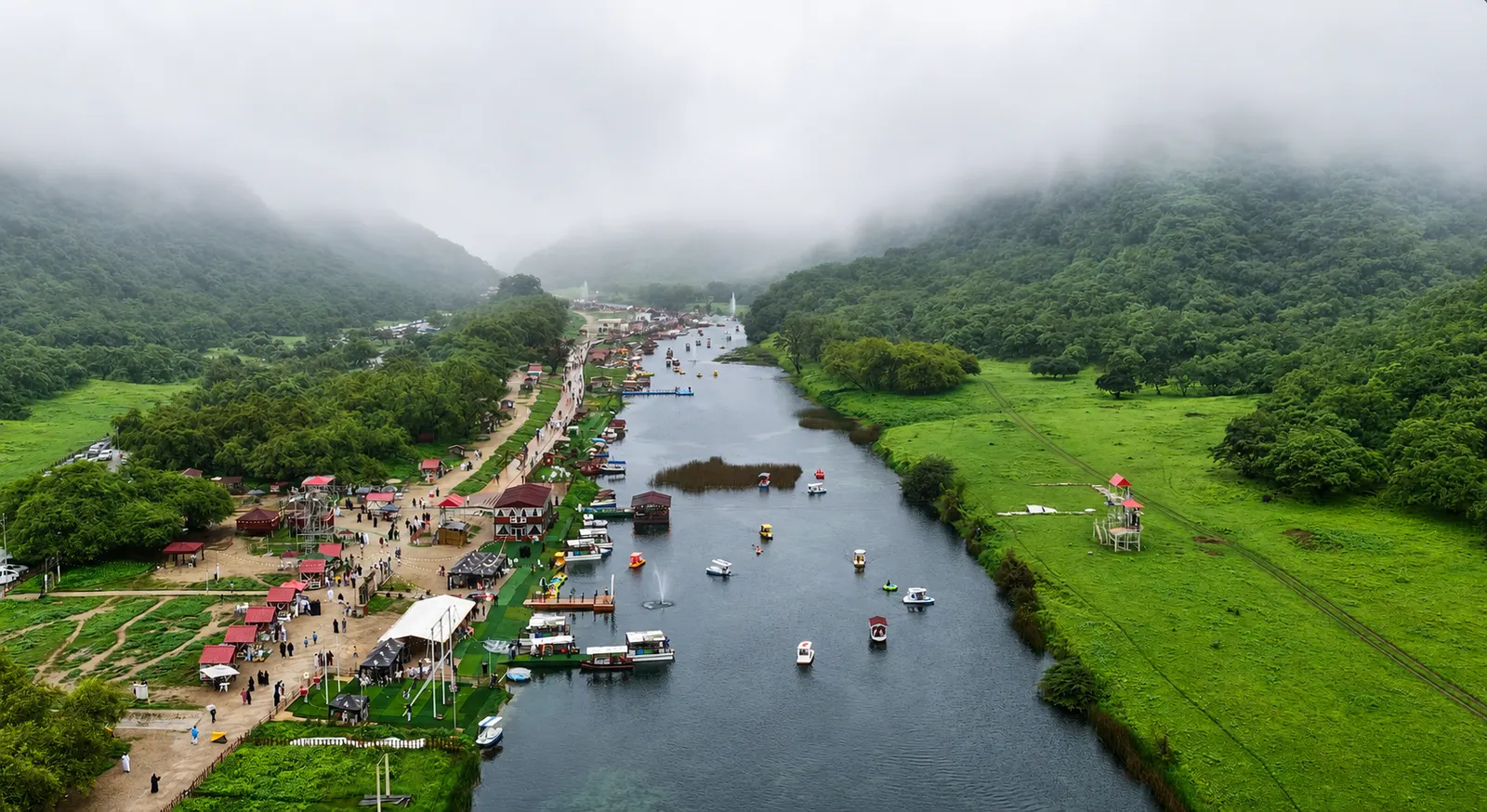
Khareef generally runs from mid-June to September. Moisture drawn off the Arabian Sea brings low cloud, drifting mist and light rain across the Dhofar mountains, and temperatures drop well below the rest of the Gulf — commonly described as somewhere around 20–27 °C, far cooler than a UAE summer.
What catches people out is that the landscape does not turn green the moment Khareef begins. The hills need weeks of moisture before they fill in, so late July and August are generally the stronger bet for the deepest greenery and the best chance of seasonal water in the wadis. Expect grey skies, damp air and limited long-distance views — that is the trade for the green.
Mid-September to October — Best for Greenery and Clearer Views
Sarb generally follows Khareef from around mid-September through October. The heavy cloud lifts, visibility improves, and in many years some greenery is still holding on. If your priority is photography or mountain viewpoints rather than the moody monsoon atmosphere, this in-between period is often the sweet spot — and it is noticeably quieter than the August peak.
November to February — Best for Beaches and Outdoor Activities
This is Salalah at its most straightforward: clear skies, calmer sea, warm rather than hot days and cool mountain evenings. The hills will have faded to gold and the seasonal waterfalls will mostly have stopped, but beaches, viewpoints, archaeological sites and long drives are all easier. For families and anyone who simply wants sunshine, this is the most reliable window.
March to May — Quieter, Warmer and Often Better Value
Spring is the shoulder season. It gets progressively hotter and the landscape is dry, but crowds thin and rates often soften. If you are coming for the coast, the frankincense sites and the museums rather than green mountains, these months are good value — just plan outdoor stops for early morning.
| Travel period | Weather and landscape | Best for | Important considerations |
|---|---|---|---|
| Late June – early July | Khareef starting; cloud and drizzle arriving, hills still turning | Cooler air, early-season atmosphere, fewer crowds | Greenery often not at its best yet |
| Late July – August | Peak Khareef; mist, light rain, strongest greenery | Green mountains, seasonal waterfalls, cool temperatures | Busiest and priciest; poor visibility, fog on mountain roads |
| Mid-September – October | Sarb; cloud lifting, some greenery often remaining | Clearer views, photography, quieter roads | Water flow reduces; conditions vary year to year |
| November – February | Dry, clear and comfortable; landscape golden | Beaches, swimming, sightseeing, families | No Khareef greenery; seasonal waterfalls mostly dry |
| March – May | Warming up, dry, hazier towards May | Quieter travel, better value, coast and heritage sites | Heat builds through the period; start early |
Conditions change every year. Khareef timing, greenery, waterfall flow and sea state are never guaranteed, so treat the table as a planning guide rather than a forecast. Official Oman tourism information describes the Khareef season in Dhofar as running from June to September, with mist and light showers across the plains and mountains.
Best Places to Visit in Salalah, Oman
Most of what people mean by “Salalah” is spread across the wider Dhofar region, and several stops need a proper drive. For the deeper walk-through of the headline sights, see my separate guide to the top 10 places to visit in Salalah. Below is the seasonal view: what each place is like, and when it is worth your time.
1. Wadi Darbat
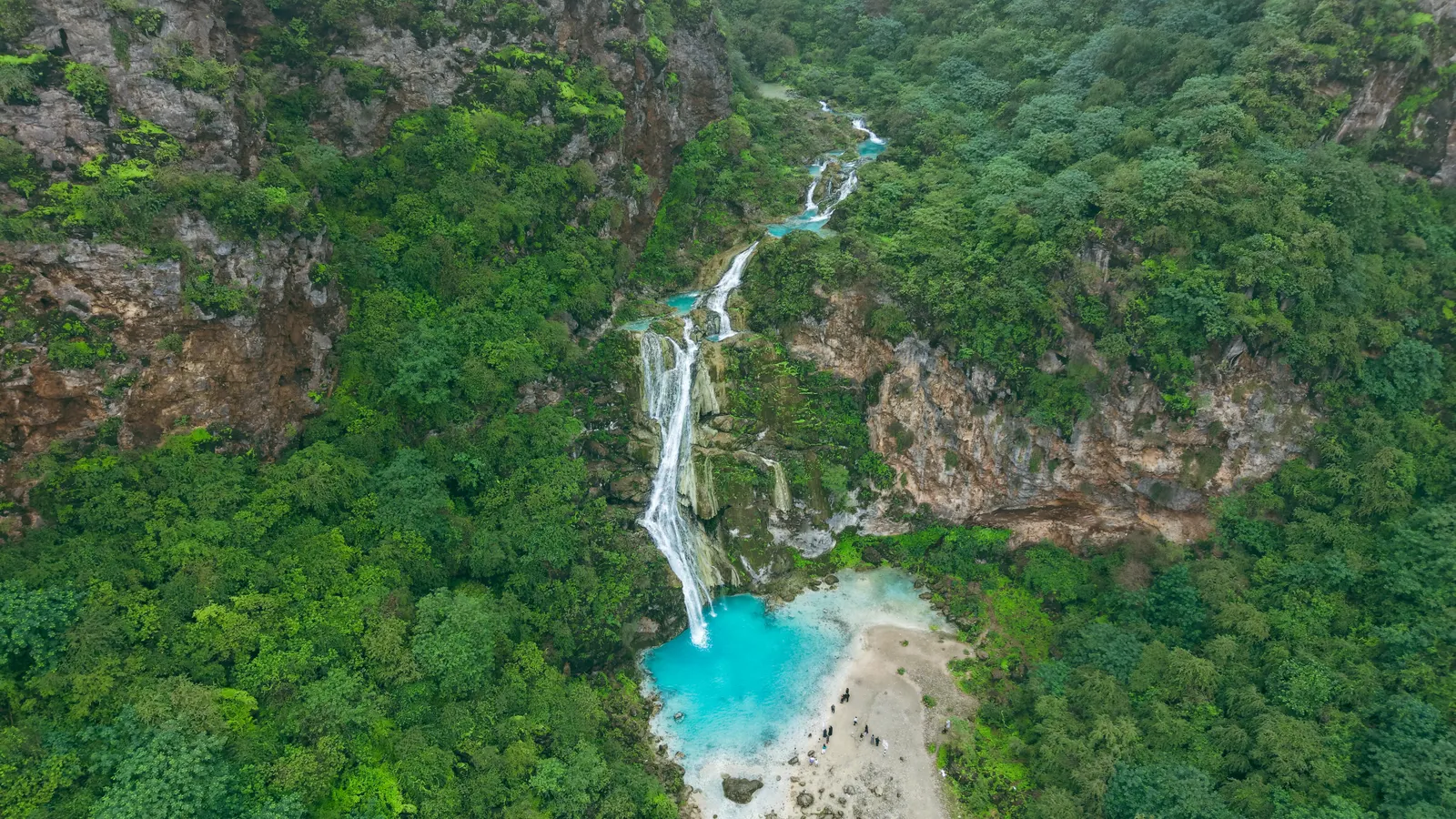
The valley everyone comes for during Khareef — grassland, pools, grazing camels and a tall cascade over the tufa cliff when the season delivers. Highly seasonal; in winter it becomes a calm dry valley that is still pleasant to walk. Go early, because the car parks fill and the access road backs up by mid-morning.
2. Ayn Athum Waterfall
A dramatic cliff amphitheatre east of Salalah that only comes alive after enough rain. Seasonal, and flow is never guaranteed even in August. Best combined with Wadi Darbat on the same eastern loop rather than driven out to alone.
3. Ayn Khor
A spring on the western side, backed by green slopes and usually visited on the run out towards Mughsail. Best during and just after Khareef, largely dry outside it, and popular with families picnicking in season.
4. Ayn Razat
The most manicured of the springs — gardens, shaded walkways and a short walk up to the source. It holds water more reliably than most, which makes it one of the few green stops that still works outside Khareef. Easy access, no 4WD, good with children.
5. Ayn Tobruk
A quieter spring in the same eastern cluster, usually a short stop rather than a destination. Strongly seasonal — pair it with Ayn Athum if you are already out that way and the water is running.
6. Al Mughsail Beach and Marneef Cave
A long beach under a limestone overhang, with blowholes that fire spray through the rock when the swell is up — and during Khareef it usually is. Good year-round: dramatic in monsoon, calm and beautiful in winter. Respect the warning signs and stay well back from the blowholes and the water when the sea is rough.
7. Fazayah Beach
Turquoise water below steep cliffs, reached by a winding descent west of Mughsail. Spectacular in clear weather, which makes it a better winter trip than a Khareef one. The road down is narrow with sharp bends; higher clearance is more comfortable, and conditions change, so check locally first.
8. Shaat Viewpoint
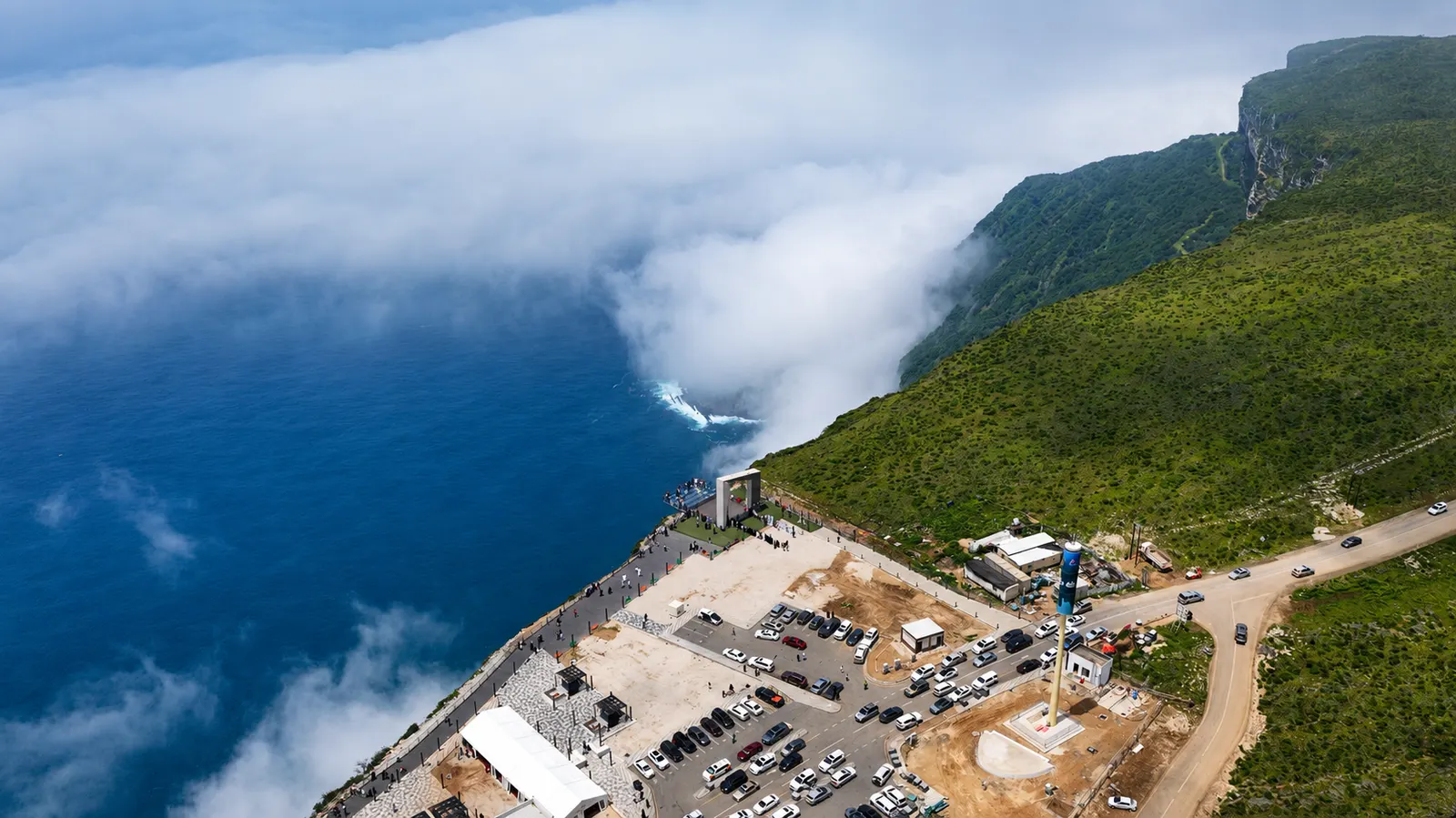
A cliff-edge viewpoint on the western coastal road with a long drop to the sea. Purely about visibility — magnificent when the air is clear, completely fogged in on a bad Khareef day. Keep back from unfenced edges and keep children close.
9. Taqah
A coastal town east of Salalah with a restored fort, a working fishing harbour and a slower pace. Works in any season, and it sits naturally on the way to Sumhuram and Wadi Darbat.
10. Sumhuram Archaeological Park
The excavated port town above Khor Rori lagoon, part of the UNESCO-inscribed Land of Frankincense property. Ruins on a bluff with the lagoon on one side and the sea on the other, plus a small site museum. Year-round, though the lagoon looks fullest late in Khareef. Check opening hours before driving out.
11. Al Baleed Archaeological Park and the Museum of the Frankincense Land
The other inscribed port site, on the Salalah waterfront, with a large park you can cross by electric buggy and a genuinely good museum on Oman’s maritime and frankincense history. The best rainy-afternoon option in the city, which makes it an easy fixture in a Khareef itinerary.
12. Wadi Dawkah
The frankincense tree reserve inland from Salalah, also part of the Land of Frankincense inscription. A quiet, arid site — an interesting contrast to the green mountains rather than a scenic showpiece — and it works in any season.
13. Mirbat
A historic port town about an hour and a half east, with old merchant houses, a fort and clear water off the headland. Best in the drier months when the sea is calm, and the coastal drive is part of the appeal.
14. Jabal Samhan
The high escarpment east of Salalah, with a viewpoint looking down thousands of feet to the coastal plain. On a clear day it is the best view in Dhofar; during peak Khareef you may be standing inside a cloud with nothing to see. The road is paved to the main viewpoint, but the weather decides whether the trip is worth it.
15. Rub Al Khali and Shisr / Ubar
North of the mountains the greenery stops abruptly and the Empty Quarter begins. Shisr, associated with the lost caravan settlement of Ubar, is the fourth component of the Land of Frankincense inscription. This is the one part of a Salalah trip where a 4WD and a local guide are genuinely necessary rather than optional — do not drive into soft dune country in a saloon car or without someone who knows the route.
Suggested Five-Day Salalah Itinerary
Four to five full days is about right for a first visit. During Khareef I would add a flexible day on top, because fog, rain, traffic and changing access conditions genuinely do rearrange plans.
- Day 1 — Salalah city: Al Baleed Archaeological Park and the Museum of the Frankincense Land, then the Al Hafa area and the waterfront late in the afternoon.
- Day 2 — Eastern loop: Taqah, Sumhuram and Khor Rori, then Wadi Darbat and the seasonal eastern waterfalls. Start early.
- Day 3 — Western coast: Al Mughsail Beach and Marneef Cave, the western viewpoints, and Fazayah if conditions and your vehicle allow.
- Day 4 — Mirbat and Jabal Samhan, or swap it for a slow beach day if the mountains are fogged in.
- Day 5 — Rub Al Khali desert excursion with a guide, or keep it as your weather-flexibility day.
Practical Tips for Visiting Salalah
- Rent a car. A normal saloon covers the city, the springs, both archaeological parks, Mughsail and the paved road up to Jabal Samhan’s main viewpoint.
- Take a 4WD or a guide for the Empty Quarter, Shisr and rougher tracks. The steep descent to Fazayah is also easier with higher clearance.
- Start early during Khareef. The popular valleys are calm at 7am and crowded by 10am.
- Drive for the conditions. Mountain fog here can cut visibility to a few metres — slow down, use low beams rather than high, and pull fully off the road if you stop.
- Pack a light waterproof layer and shoes with real grip. Wet rock and wet grass catch visitors out more than anything else.
- Give camels and cattle room. They wander onto roads constantly in season, especially around Wadi Darbat.
- Never enter a flooded wadi on foot or in a vehicle, and do not swim below waterfalls or in fast-moving water.
- Check tides and sea conditions before entering the water anywhere on this coast, and follow local warning signs.
- Confirm opening times for the archaeological parks and museums, which change seasonally and around public holidays.
- Take your rubbish out with you. The busy sites take a visible battering during Khareef.
- Drones need approval. Requirements are set by the Civil Aviation Authority of Oman and they change. Check the current rules and hold the required permits before you fly — do not assume a UAE or home-country licence carries over.
A personal note. I film for a living, and Salalah is the one destination where I would change my dates depending on the shot I wanted. For green hillsides and moving water, August. For clean wide views down the escarpment, October onwards. Trying to get both on one trip is how people end up disappointed with a place that had nothing wrong with it.
Is Salalah Worth Visiting?
Yes — provided you match your dates to what you actually want. Come in late July or August for the greenest Khareef experience, accepting mist and limited views as part of the deal. Come mid-September to October for improving visibility with a decent chance of remaining greenery. Come November to February for beaches, sunshine and comfortable outdoor exploration.
From the UAE it is a short flight and an easy long weekend, and it is unlike anywhere else in that range — including the mountain escapes closer to home such as Hatta or the east-coast villages around Khor Fakkan.
Frequently asked questions
What is the best month to visit Salalah?
August is generally the best single month for the Khareef experience, when the Dhofar mountains are at their greenest. For clear skies, beaches and comfortable sightseeing, choose a month between November and February.
When is Khareef season in Salalah?
Khareef generally runs from mid-June to September. Moisture from the Arabian Sea brings mist, cloud cover and light rain to the Dhofar region, and temperatures stay far below the rest of the Gulf.
Is September a good time to visit Salalah?
Early September usually still falls within Khareef, so greenery can remain strong. From mid-September the Sarb period begins, cloud lifts and visibility improves, which many travellers prefer for photography and mountain viewpoints.
Can you visit Salalah outside Khareef?
Yes. October to February brings clearer weather, calmer seas and excellent conditions for beaches, archaeological sites and long drives. The landscape is golden rather than green and seasonal waterfalls will mostly have stopped.
How many days do you need in Salalah?
Four to five full days suits a first visit and covers the city, both coastal loops and the mountains. During Khareef, add a flexible day because fog, rain and traffic can change plans at short notice.
Do you need a 4WD in Salalah?
Not for most of the main sights, which are reached on paved roads. A 4WD and a local guide are appropriate for the Rub Al Khali desert, Shisr and rougher tracks, and higher clearance is more comfortable on the steep descent to Fazayah Beach.
Is Salalah suitable for families?
Yes. Ayn Razat, Al Baleed Archaeological Park, Taqah and the main beaches all work well with children. Take extra care near cliff edges, blowholes and moving water, and never enter a flooded wadi.
Are Salalah’s waterfalls open all year?
No. The waterfalls at Wadi Darbat, Ayn Athum and the surrounding springs are seasonal and depend on rainfall. Flow is never guaranteed, even during Khareef, and most stop outside the season.
Can tourists fly drones in Salalah?
Only with the approvals required by the Civil Aviation Authority of Oman. Rules and permit requirements change, so check the current regulations before travelling and do not fly without the necessary authorisation.
Is Salalah worth visiting from Dubai?
Yes. It is a short flight from the UAE and offers scenery you cannot find anywhere else in the region, particularly during Khareef when the mountains turn green while the rest of the Gulf is at its hottest.
Explore more Oman travel guides
If this trip is on your list, the companion guide to the best places to visit in Salalah goes deeper on each stop, and the Oman destination page collects everything published here so far. There is more in the same spirit under hidden gems and things to do closer to home in the UAE.
For day-to-day UAE and regional travel, follow @umutdxb. For international trips and filmmaking work, follow @umutilkaya.
About the author
Umut İlkaya is a Dubai-based travel content creator, filmmaker and licensed drone pilot who shares destination guides, hidden gems and hotel experiences across the UAE, Oman and beyond.
Travel disclaimer
This article is provided for general travel inspiration and informational purposes only. Weather, Khareef timing, waterfall flow, sea conditions, road access, attraction opening hours, prices, visa rules, drone regulations and local restrictions can change without notice. Always check current information with official Oman authorities, your airline, accommodation and trusted local operators before travelling. Follow all warning signs and instructions, never enter flooded wadis or restricted areas, and use qualified guides and suitable vehicles for remote, mountain or desert routes. Umutdxb is not responsible for loss, injury, disruption or expense arising from reliance on this guide.
More from this trip: places to visit in Salalah, things to do across the UAE.